

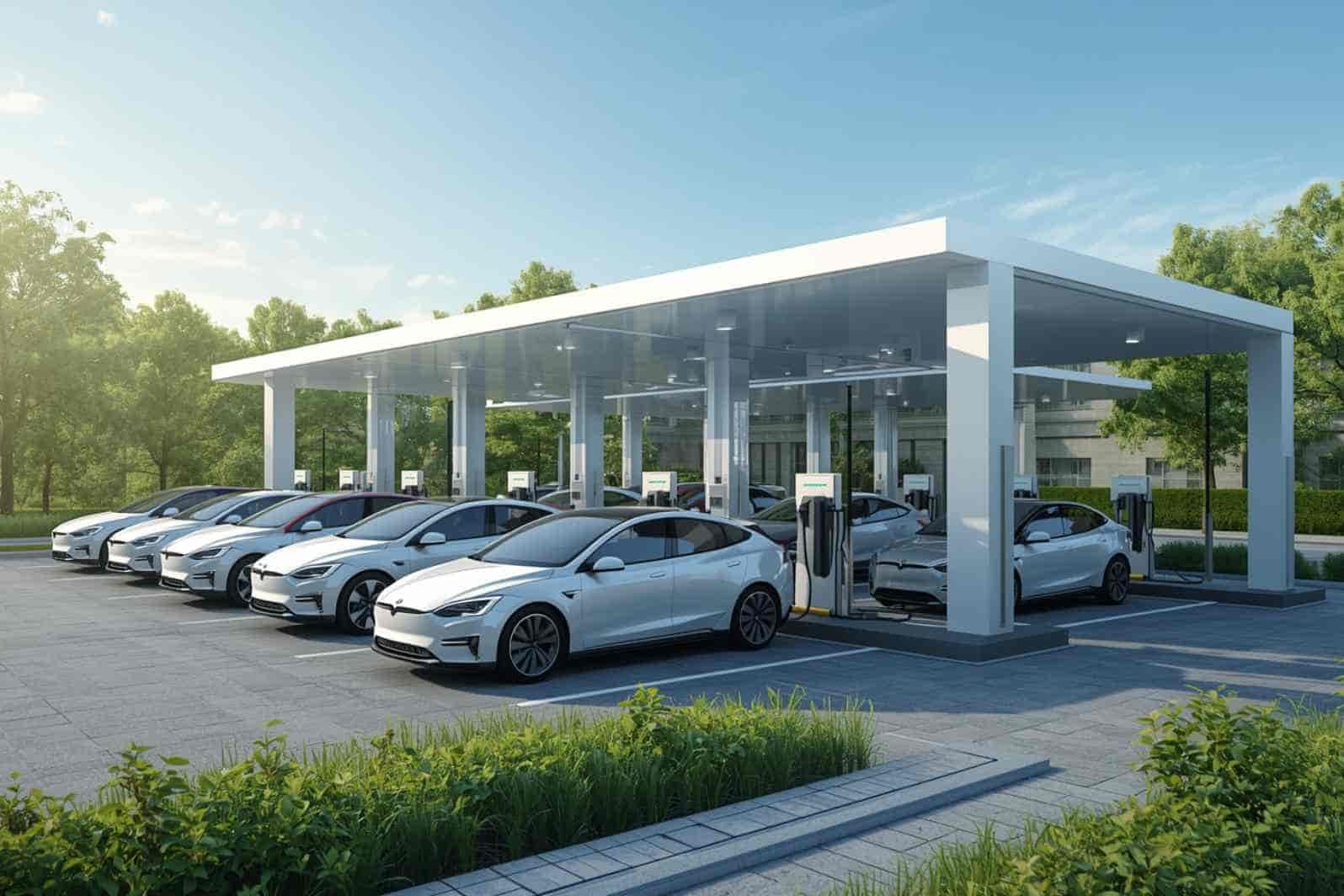
Electric vehicles are becoming increasingly prevalent globally, and urban mobility meets the trend of courtesy readjusting postsupply. A growing profile of governments, businesses and consumers wants to see cleaner transportation solutions that protect the atmosphere and improve energy efficiency. Thus smart EV charging networks are rapidly becoming a fundamental aspect of the modern city utility.
Smart EV charging networks use technology to improve the management of electric vehicle charging in a more technically savvy manner. These systems may enable drivers to locate charging station, track energy usage and increase the convenience of recharging. Smart charging infrastructure will be critical to the future of transportation as cities develop out electric mobility goals, and what does smart mean in this context?
1. Understanding Smart EV Charging Networks
Smart EV charging networks are interlinked systems run by smart platforms and effective energy management tools for overseeing electric vehicle (EV) charging. Such networks enable real-time communication between charging stations and either a vehicle, user or energy system.
This facilitates better energy consumption rates and boosts user convenience with a more complete solution on charging options.
2. The Case for Smart Charging Infrastructure in Cities
The demand for electric vehicles is increasing, and urban areas that are extremely dependent on energy infrastructure are adopting smart EV charging systems. Scalable charging solutions must be deployed at scale to meet growing ranks of EV users in cities.
Now, let us explore several important reasons why smart charging networks are becoming increasingly popular:
- Support for electric vehicle growth
- Better energy management
- Reduced urban pollution
- Improved charging convenience
All of these advantages are fueling cities to update transportation infrastructure.
3. Improved Charging Accessibility
The smart charging networks enable drivers to seamlessly access nearby electric vehicle charging stations via mobile applications and digital navigation systems.
This not only reduces charging problems but also helps ensure a smoother travelling experience.
4. Efficient Energy Management
With more than one charging station, smart charging systems can better manage baseload electricity demand.
This lessens the impact on urban power systems during peak consumption periods.
5. Faster and Smarter Charging Experience
Most of the chargers now offer fast charging and real time updates at the time of charging. Charging level is monitored through digital platforms by dealers and drivers.
This enhances ease of use and minimizes the time spent waiting.
6. Integration With Renewable Energy
Certain highlighted Smart Charging networks also link with renewable energy such as solar and wind. This contributes to increased sustainabilty in the transport system and sustainable ensrgy use.
Not surprisingly, these are the key charging features you’ve been conditioned to care about by transport experts.
- Real time charging monitoring
- Smart energy distribution
- Mobile app integration
- Fast charging technology
Together these features enhance overall charging efficiency.
7. Support for Sustainable Urban Development
Furthermore, smart EV charging infrastructure aids cities in the reduction of carbon emissions and enhances environmental sustainability. Electric versatility facilitates cleaner urban transport systems.
Contributing to more healthy and eco friendly cities.
8. Challenges of Smart Charging Networks
Even as smart EV charging systems have myriad advantages, they also face some challenges:
- High infrastructure costs
- Some areas lack common coverage
- Power grid management issues
- Technology maintenance requirements
- Charging compatibility concerns
When faced with these challenges, Cities and businesses need planning done right.
9. Impact on the Automotive Industry
Smart charging networks are enticing drivers to make the switch and adopt electric vehicles as a result of their expansion. Charges partnerships and connected car technologies are other areas that automakers are pouring money into.
Which is pushing ahead the transition towards electric mobility.
10. The Evolution of Smart EV Charging
Growth in smart EV charging networks is a comparable trend this will follow the growth of electric vehicles on the roads. These systems could position AI based energy management, wireless charging and fast charging as parts of future technologies.
To some extent, the big winners here may be cities that invest in smart charging infrastructure sooner rather than later.
Key Takeaways
Smart EV charging networks are revolutionizing urban mobility via enhanced access, energy efficiency and sustainability. They support the growing demand for electric vehicles and serve cities in creating cleaner urban transit spaces. With the continued growth in electric mobility, smart charging infrastructure will be an essential component of future urban development.
FAQs:
Q1. What are those smart EV charging networks?
These become smart, digitally interlinked systems that administer electric vehicle charging with economic efficiency.
Q2. Q Why are cities investing in smart chargepoint infrastructure?
Cities employ them to back EVs, combat pollution and augment transportation systems.
Q3. In what ways do smart charging systems implement convenience?
They offer real time charging info, mobile app support, and streamlined access to stations.
Q4. Does smart EV charging help with renewable energy?
Yes, some systems are interfaced with solar and other sustainable resources.
Q5. Do you think that smart charging is important for the future of cities?
Expert consensus says smart charging networks will be top-of-mind for coming car boardroom debates
